IoT and Energy
Data-Driven HVAC and Building-Energy Optimization
A winning START Hack project using HVAC IoT data and thermal building modelling to explore data-driven energy optimization.
- Role
- Team Member
- Organization
- START Hack 2025
- Location
- St. Gallen, Switzerland
- Period
- March 2025 – January 2026
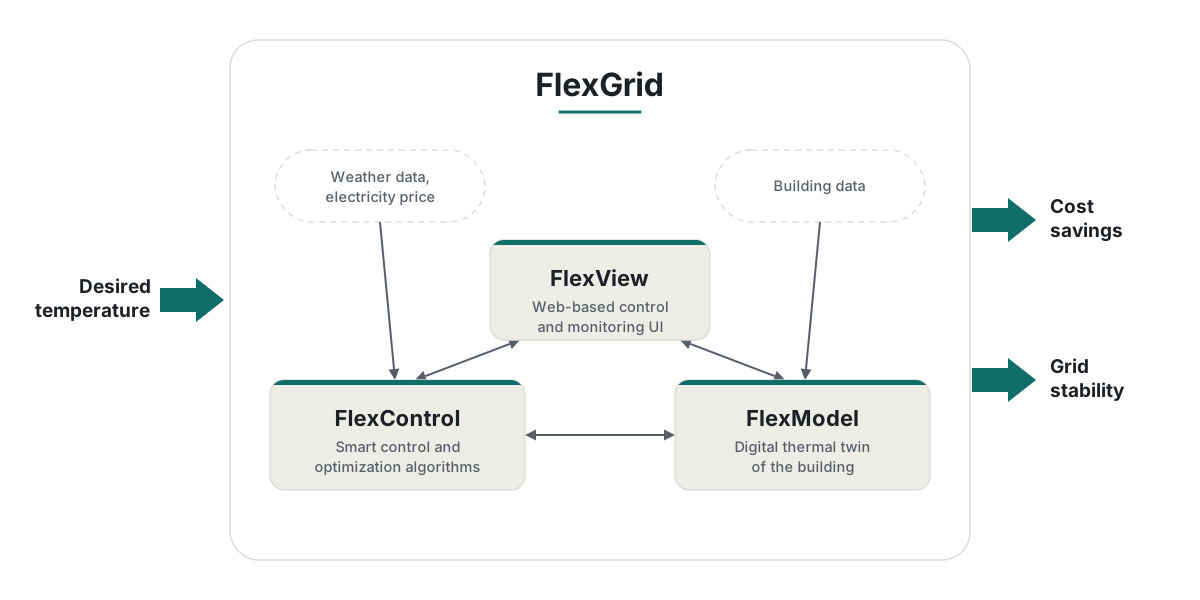
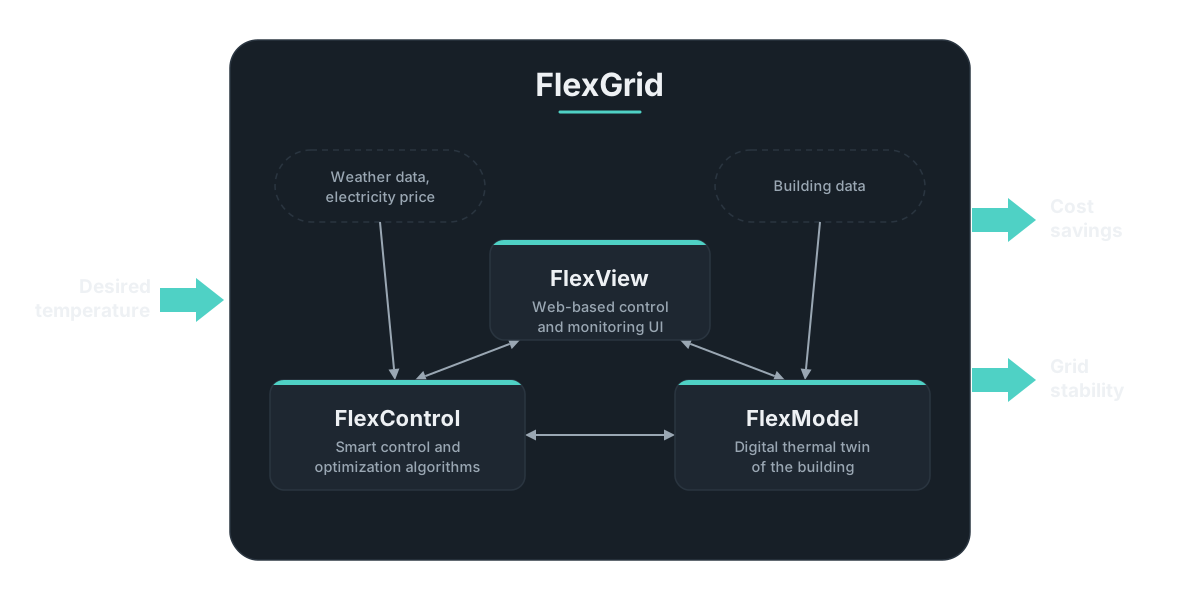
Commercial buildings log enormous amounts of HVAC data, yet almost none of it shapes when the building actually consumes energy. That is a missed opportunity, because a building’s thermal mass works like a battery: pre-heat or pre-cool while electricity is cheap and green, then coast through the expensive hours. Using that flexibility requires a model that links HVAC behaviour to the physics of the building itself. At START Hack 2025, a building automation company handed us raw data from its smart energy valves and left the question open: what is this data actually worth? Most teams built dashboards. We chose to model the building. Combining the valve data with thermal building modelling and price-driven optimization, we turned the dataset into a demand-response concept, won the challenge and continued the work as a research project. The result was FlexGrid, a Python platform built on EnergyPlus, NREL’s building physics engine, which we drive through eppy to simulate thermal loads, envelope and HVAC response. Live inputs come from the Energy-Charts API (day-ahead electricity prices) and Meteostat (hourly weather). In parallel we prototyped LSTM and Transformer models in PyTorch to forecast zone temperatures directly from data, a learned counterpart to the physics simulation. On the business side, we mapped the HVAC ecosystem and its stakeholders, ran expert interviews and assessed the technical and commercial feasibility of smart building concepts, including the practical question of who pays for flexibility.
- HVAC
- IoT Data
- Thermal Modelling
- Energy Optimization